2026-11-12 · Frank Delgado
Local Factors That Raise Water Damage Restoration Costs After Gulf Storms
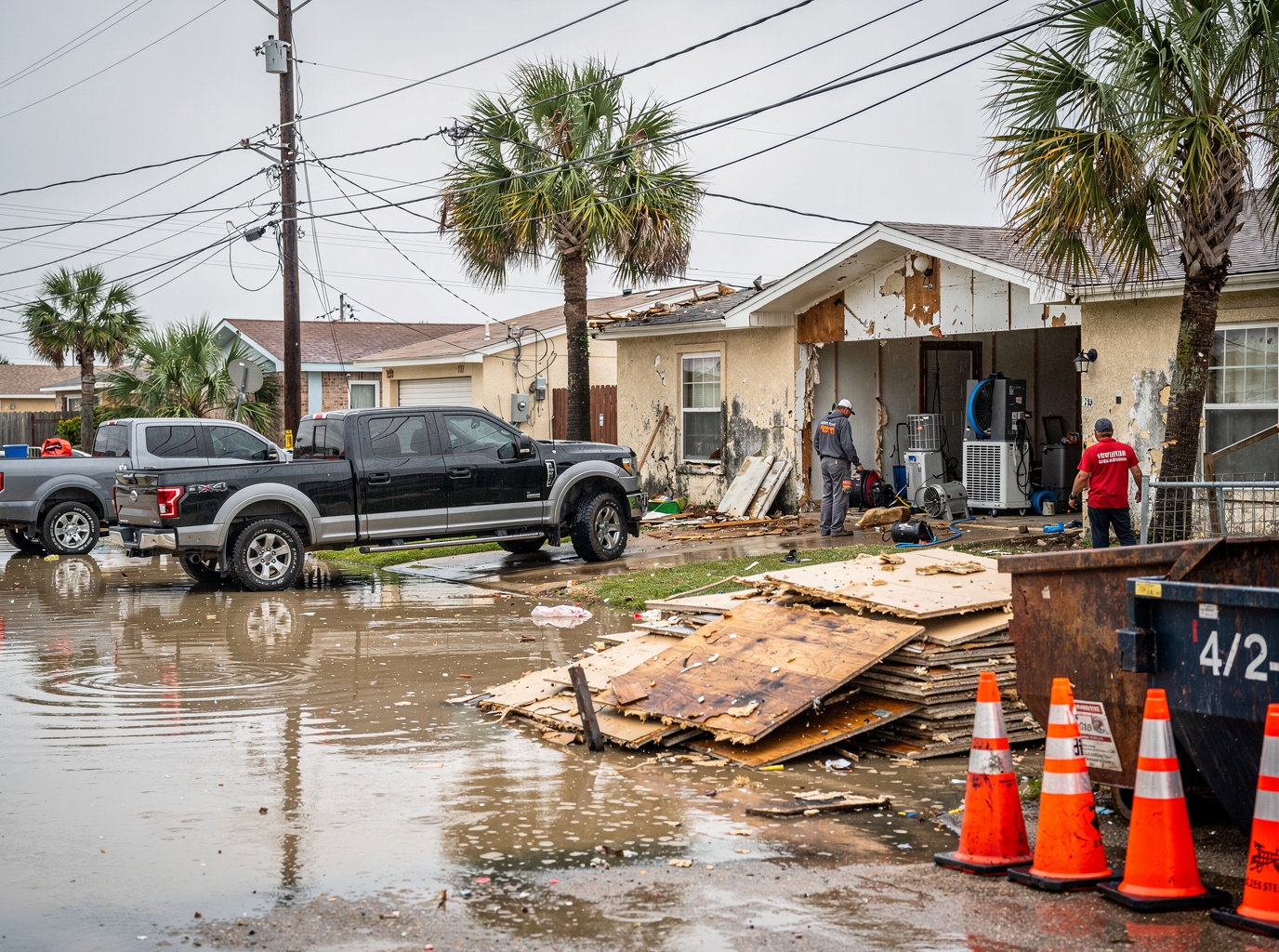
Gulf storms raise water damage restoration costs in Corpus Christi by 30 to 60 percent compared with inland events because of repeated storm surge exposure along Corpus Christi Bay, slower evaporation in humid subtropical conditions, and the prevalence of slab-on-grade homes built before 1980 in neighborhoods such as Downtown and Calallen.
Storm Surge and Saltwater Intrusion Patterns
Gulf storms push saltwater into low-lying blocks of Flour Bluff, North Beach, and Padre Island where elevations sit only a few feet above sea level. Salt crystals remain in drywall, subfloors, and electrical boxes long after visible water recedes, forcing technicians to remove more material than freshwater jobs require. In Southside and Calallen, older concrete slabs crack under hydrostatic pressure, allowing water to migrate under cabinets and into wall cavities that standard extraction equipment cannot reach. These conditions add multiple days of antimicrobial treatment and often require full baseboard and insulation replacement that inland properties avoid. Readers facing repeated surge events can review detailed intrusion patterns in the related article Hurricane Season Water Intrusion Risks Near Corpus Christi Bay.
Humidity Slowing Evaporation and Mold Growth
Corpus Christi’s humid subtropical climate keeps relative humidity above 75 percent for weeks after a storm, even when daytime highs reach 92 degrees. Moisture trapped inside wall cavities and under vinyl flooring in Flour Bluff and Southside homes takes 8 to 14 days longer to reach safe drying standards than in drier regions. Technicians must run additional dehumidifiers and perform daily moisture readings with penetrating meters to prevent hidden mold colonies from forming behind cabinets. Mild winter temperatures in Nueces County rarely drop low enough to provide natural drying, so equipment runtime extends into the shoulder seasons and increases power and labor line items. Properties near the Texas State Aquarium and Selena Memorial face the same humidity load because prevailing winds carry bay moisture inland.
Older Housing Stock and Material Removal Needs
Many homes in Downtown, Calallen, and Robstown were built between 1950 and 1975 with plaster walls, hardwood floors, and minimal vapor barriers. After Gulf storm flooding, plaster must be removed in 24-inch strips above the water line, and hardwood often cups beyond salvage, requiring full replacement rather than refinishing. Slab foundations common in these neighborhoods hide water under tile and carpet padding, forcing crews to lift finished surfaces across entire rooms. In contrast, newer construction in Portland and Kingsville uses treated lumber and improved underlayment, reducing removal scope. Technicians at 318 Centaurus St schedule extra dumpsters for these older properties because material volume rises sharply once walls are opened.
Logistics Across Nueces County and Nearby Cities
Travel between Corpus Christi jobsites and outlying areas such as Port Aransas, Robstown, and Kingsville adds fuel and crew time after major storms close access roads. Equipment staging at the address on Centaurus Street allows faster deployment to Flour Bluff and Padre Island, yet traffic detours around flooded sections of Highway 358 still extend response windows. Limited parking in dense Downtown blocks requires smaller drying units that run longer, while open lots in Calallen permit larger air movers that finish faster. Crews coordinate with local power providers because outages after Gulf events delay equipment startup by 24 to 48 hours in Southside and North Beach. Property owners in these corridors benefit from reviewing the service details at Water Damage Restoration before storms arrive.
Practical Steps Homeowners Can Take
Document water lines on interior walls with photos before crews arrive so adjusters see the full scope. Move furniture away from exterior walls in advance to speed demolition. Keep windows closed during initial drying to maintain negative pressure inside the structure. Schedule follow-up inspections 30 days after equipment removal because residual salt in slab cracks can draw moisture during the next high-humidity period. These steps reduce repeat visits that otherwise add to total project expense in Nueces County.