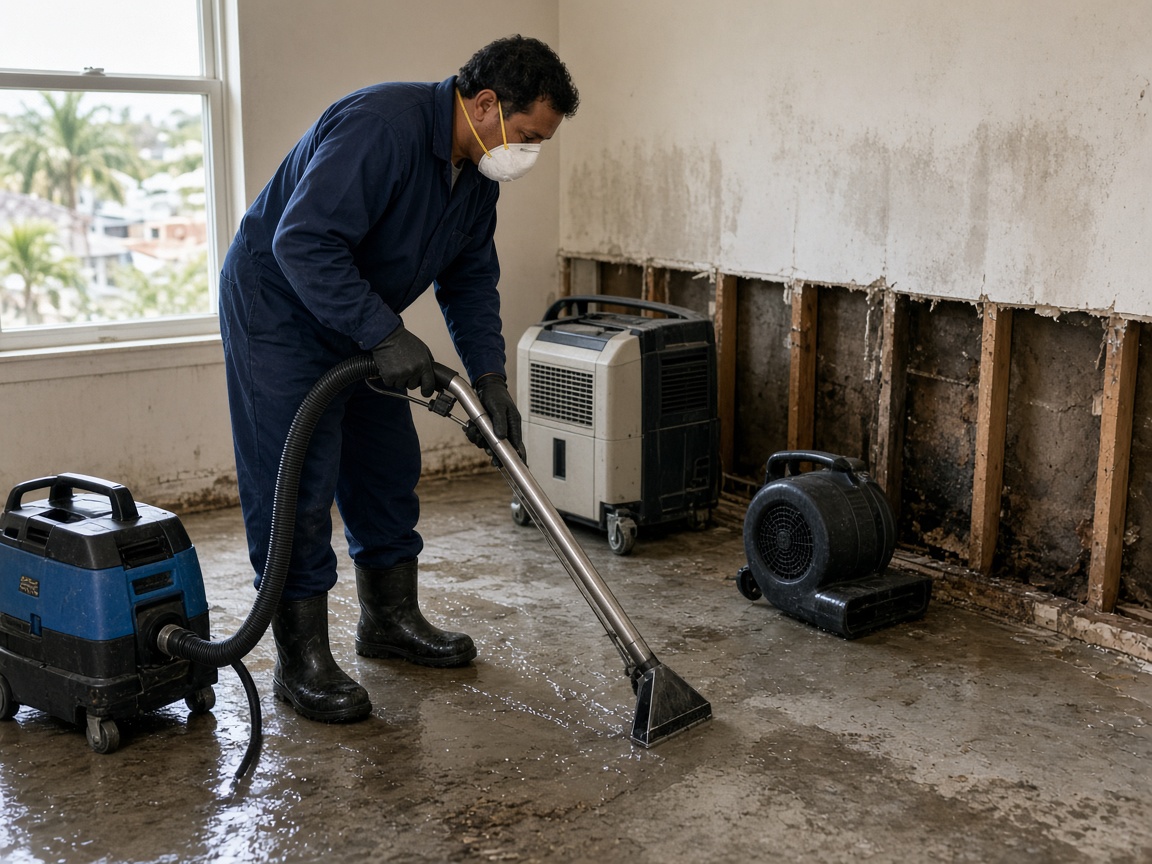
Corpus Christi’s humid subtropical climate means moisture lingers long after the rain stops, especially in older slab-on-grade homes common in Calallen and Southside. When water enters through roof leaks near the bay or from burst pipes during mild winter fronts, it quickly migrates under tile and into wall cavities. Technicians must pull baseboards early and use moisture meters on concrete because trapped humidity breeds mold within 48 hours even when surface temps feel mild.
Homes in Flour Bluff and near North Beach sit on low-lying ground where storm surge or heavy runoff from Padre Island roads can push water against foundations for days. Extraction crews often work around the clock because standing water under kitchen cabinets or in laundry rooms soaks particleboard and laminate before owners notice. Dehumidifiers sized for the square footage and outside humidity levels are essential; running undersized units only pushes moisture deeper into drywall.
Nueces County building practices from the 1970s and 80s left many Downtown and Calallen properties with limited access points under slabs. When a slab leak occurs, crews must map the plumbing layout before cutting to avoid damaging rebar or electrical runs. Restoration plans always include documenting every wet material for insurance adjusters who visit from nearby Robstown or Kingsville.
After extraction, crews focus on hidden pockets behind Selena Memorial-area commercial walls or in multi-story buildings where water travels vertically through elevator shafts. Proper drying requires daily moisture logs and adjustments to airflow so that wood framing and insulation reach acceptable levels before new finishes are installed.
Technician insight
In Corpus Christi the thing that catches most people out with Water Damage Restoration is how fast mold takes hold once humidity stays above 60 percent for even two days after a leak. Older Southside and Calallen slab homes trap moisture under tile and baseboards where you cannot see it, and the mild winters never give the house a chance to dry out naturally the way colder northern climates do.
Flour Bluff Kitchen Leak
Heavy rain pushed water under a home’s back door and into the kitchen. We found saturated particleboard cabinets and moisture readings above 20 percent in the slab. Extraction and targeted drying prevented mold growth; the owners moved back in after four days with no visible damage.
Water Damage Restoration Services We Offer
✓Emergency Water Extraction
Rapid removal of standing water from slabs, carpets and wall cavities using truck-mounted pumps and portable units sized for Corpus Christi humidity.
✓Structural Drying and Dehumidification
Placement of commercial air movers and dehumidifiers to pull moisture from concrete, drywall and insulation in homes across Southside and Flour Bluff.
✓Mold Prevention After Water Intrusion
Application of EPA-registered antimicrobials and HEPA vacuuming of affected surfaces before mold colonies establish in the region’s year-round humidity.
✓Slab Leak Water Damage Repair
Detection and drying beneath concrete slabs common in Calallen and older Downtown properties without disturbing rebar or plumbing runs.
✓Storm and Hurricane Related Restoration
Cleanup and drying after heavy rain or surge events that affect North Beach and Padre Island properties, including content removal and documentation for claims.
✓Carpet and Hardwood Drying
Specialized equipment to salvage or replace flooring materials soaked by leaks or flooding in Nueces County residences.
Water Damage Restoration Cost in Corpus Christi, TX
| Service | Typical Range | What Affects It |
|---|---|---|
| Emergency Extraction Visit | $350–$850 | Varies by volume of water and time of day |
| Full Structural Drying Package | $1,200–$3,500 | Depends on number of rooms and humidity load |
| Slab Leak Drying | $900–$2,400 | Access difficulty and hidden moisture extent |
| Mold Prevention Treatment | $400–$1,100 | Square footage and surface types treated |
Ranges are typical for Corpus Christi, TX and confirmed with an exact written quote before any work starts.
How it works
- 1
On-Site Assessment
Technician inspects all affected rooms, measures moisture in walls and slabs, and identifies hidden water paths common in local slab construction.
- 2
Water Removal
Extraction equipment removes standing water from floors and cavities before it migrates further into neighboring rooms or units.
- 3
Drying And Monitoring
Air movers and dehumidifiers run with daily moisture checks until materials reach safe levels for the local climate.
- 4
Restoration And Final Walkthrough
Replace or repair damaged materials, then walk the property with the owner to confirm all wet areas are addressed.
Pricing
Upfront quotes after inspection; final cost depends on square footage, water category and how long materials have been wet.