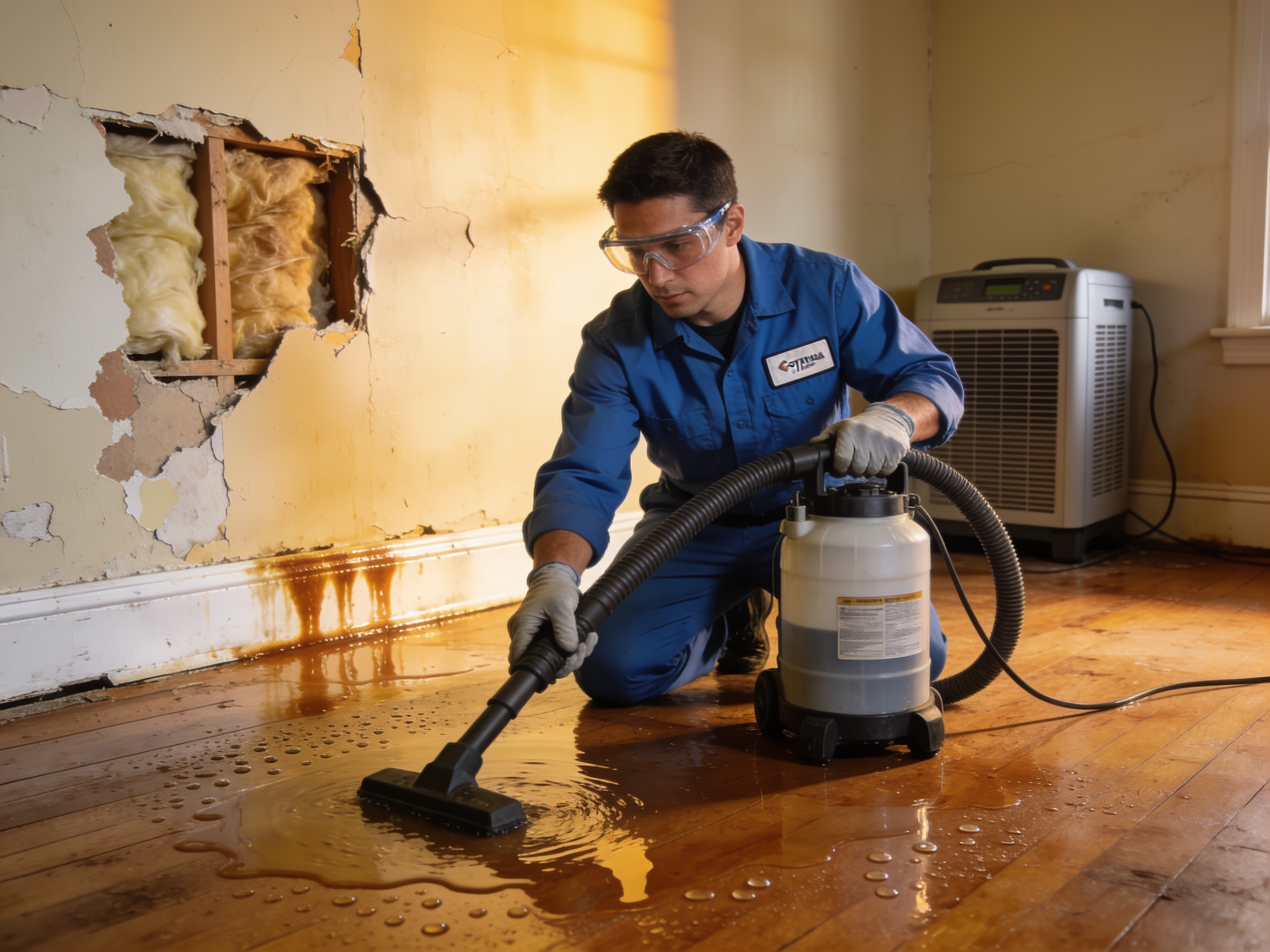
Corpus Christi’s humid subtropical climate brings hot summers and mild winters that accelerate mold growth once water enters a structure. Older housing stock in Downtown and Calallen often features aging galvanized plumbing and slab foundations that hide leaks until damage spreads under flooring. Technicians must extract standing water quickly then run industrial dehumidifiers longer than in drier regions because ambient moisture from Corpus Christi Bay keeps relative humidity elevated.
Properties near North Beach and Padre Island face periodic tidal influences and storm runoff that saturates fill dirt around foundations. In these areas crews frequently encounter trapped moisture between pier-and-beam subfloors and must remove baseboards to allow airflow. Southside and Flour Bluff homes built on clay soils experience differential settling that cracks sewer lines, creating recurring Category 3 water events that require containment barriers and negative air machines.
Robstown and Kingsville clients sometimes drive in after roof leaks or appliance failures because local crews understand the same regional weather patterns. Every job begins with moisture mapping using pin and pinless meters to document hidden saturation in drywall, cabinets, and insulation before any demolition. Failure to address the elevated humidity typical of Nueces County leads to secondary mold within 48 hours even after visible water is gone.
Technician insight
In Corpus Christi the thing that catches most people out with Emergency Water Damage Restoration is how fast mold sets in once humidity from the bay gets trapped under vinyl plank or behind baseboards in 1970s Flour Bluff slab homes; skipping the step of pulling trim and running dehumidifiers for an extra day almost always means tearing out more drywall later.
Hidden Slab Leak in Southside
A homeowner noticed buckling laminate near the kitchen after a week of mild winter rain. Inspection found a pinhole leak under the slab that had wicked moisture into the particleboard subfloor and lower cabinets. Crews extracted water, removed baseboards for airflow, and ran drying equipment for six days until readings matched the rest of the house.
Emergency Water Damage Restoration Services We Offer
✓Emergency Flood Extraction
Rapid removal of standing water from homes in low-lying Flour Bluff and Southside neighborhoods before it migrates into wall cavities.
✓Structural Drying After Leaks
Industrial air movers and dehumidifiers sized for Corpus Christi’s high humidity to dry slab foundations and pier-and-beam floors without promoting mold.
✓Category 3 Water Cleanup
Containment and removal of contaminated water from broken sewer lines common in older Calallen and Downtown properties.
✓Content Pack-Out and Storage
Safe removal and climate-controlled storage of furniture and belongings from affected rooms in Padre Island vacation homes.
✓Hidden Moisture Detection
Thermal imaging and meter readings to locate trapped water behind tile and in insulation typical after roof leaks near the bay.
Emergency Water Damage Restoration Cost in Corpus Christi, TX
| Service | Typical Range | What Affects It |
|---|---|---|
| Category 1 Clean Water Extraction | $800–$2,200 | Varies by room count and access in slab homes common in Southside. |
| Category 3 Contaminated Water Job | $2,500–$5,500 | Includes containment and disposal; higher for sewer line breaks in older Calallen properties. |
| Full Structure Drying | $1,200–$3,800 | Equipment runtime driven by humidity levels near Corpus Christi Bay. |
| Content Pack-Out | $600–$1,800 | Based on volume and need for climate-controlled storage. |
Ranges are typical for Corpus Christi, TX and confirmed with an exact written quote before any work starts.
How it works
- 1
Arrival And Safety Assessment
Technicians arrive from the Centaurus Street location, shut off water sources, and evaluate electrical hazards before entering any structure in Downtown or North Beach.
- 2
Water Extraction
Standing water is removed using truck-mounted pumps sized for the volume typical after heavy rain in Nueces County low spots.
- 3
Moisture Mapping
Pin and pinless meters plus thermal cameras document saturation in walls, floors, and cabinets across the affected square footage.
- 4
Drying And Monitoring
Equipment placement and daily readings continue until moisture levels match unaffected areas, accounting for local humidity.
- 5
Final Clearance
Documentation and walkthrough confirm the structure is dry before any reconstruction begins.
Pricing
Pricing depends on water category, affected square footage, and drying duration; upfront quotes provided after inspection.